When a family of Asian elephants in northern India gathered around a ditch on a tea plantation and began packing soil over the body of a deceased calf, they were doing something that, until recently, no scientist had formally documented. They were burying their dead. They are just one of many animals that hold funerals for their dead. The footage, captured in 2022 and 2023 and published in the Journal of Threatened Taxa in 2024, stopped the scientific world in its tracks. Grief in animals was nothing new, but scientists were surprised to find that it looked startlingly like a funeral.
The animals that hold funerals span continents and ecosystems, including orca whales in the Pacific Northwest, crows in urban parks, chimpanzees in the rainforests of Cameroon, and now Asian elephants in the foothills of the Himalayas. Each species behaves differently, and scientists are debating what it all means. Is it grief? Ritual? Survival instinct? Or something in between that we don’t have a word for yet?
Animals That Hold Funerals: The Elephant Evidence

Of all the animals that hold funerals, elephants present the most compelling and hotly contested case. African elephants have long been known to linger over the remains of their dead, gently touching their bones with their trunks, and sometimes returning to the same site for years. But the 2024 Journal of Threatened Taxa study broke new ground by documenting something far more deliberate in Asian elephants.
Researchers Parveen Kaswan of the Indian Forest Service and Akashdeep Roy of the Indian Institute of Science Education and Research documented five separate incidents in which herds of Asian elephants transported dead calves, dragging them by the trunk and legs to irrigation ditches in tea plantations before covering them with soil, always positioning the body with its legs pointing upward. Post-mortem reports confirmed drag marks on the calves, meaning they had died elsewhere and been moved intentionally.
Research Insight: This is the first known instance of Asian elephants performing full burials using soil, a behavior previously undocumented in any non-human species, according to co-author Akashdeep Roy.
In one case, the surrounding herd loudly trumpeted and roared around the burial site. Scientists believe the 22-month gestation period of elephants, which is the longest of any land mammal, and elevated oxytocin bonding could explain why they respond so intensely to the death of their calves. Critics, however, note that none of the burials were directly observed; all five were discovered after the fact. Heidi Riddle of the IUCN’s Asian Elephant Specialist Group cautioned that more evidence is needed before it can definitively be labeled as “intentional burial”. The debate itself is part of what makes elephant behavior so scientifically fascinating.
Crow Funerals: Animals That Hold Funerals With a Hidden Agenda
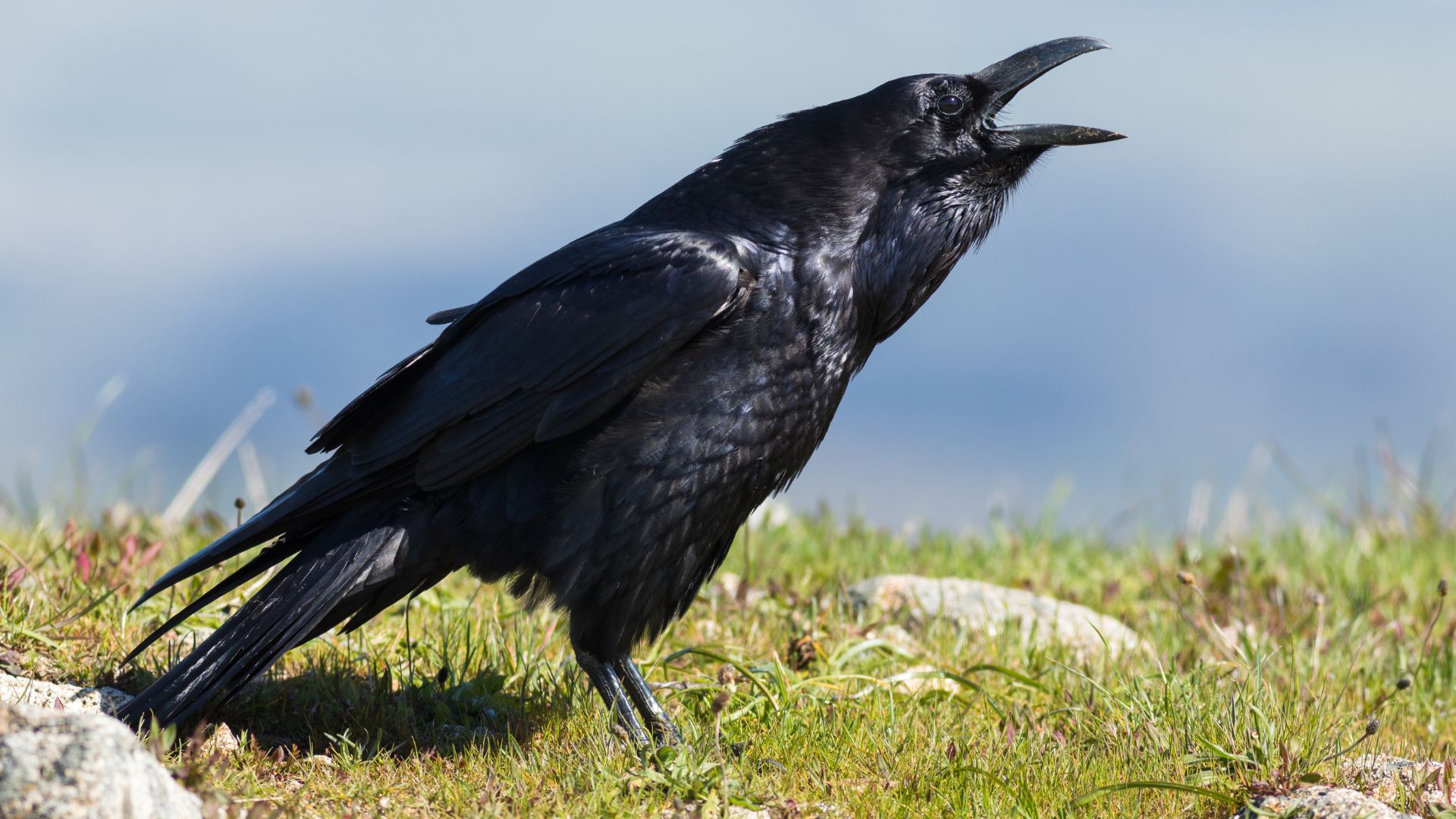
Crows are interesting because they don’t just mourn; they investigate. When a crow dies, nearby crows often gather in large, noisy groups around the body. This is a behavior that scientists formally call a “cacophonous aggregation.” To the casual observer, this looks like a funeral. To researchers, it is a little more complex.
Teresa Iglesias and her team at the University of California, Davis, published research in the journal Animal Behavior showing that western scrub-jays (now called California scrub-jays) can hold these gatherings for up to 48 hours and display behaviors distinctly different from their responses to predators. Following the event, crows were found to avoid areas where they had seen dead companions for up to three months.
Initially, the dominant theory was purely practical: crows gather to assess what killed the individual and update their threat map. If a cat or a hawk caused the death, knowing that could save lives. But newer research is complicating this tidy explanation. The gatherings involve vocalizations that differ from standard alarm calls, and some birds appear to simply stand in silence, which is not a behavior that is typically associated with threat assessment.
Lesser-Known Fact: Magpies, another corvid, have been observed bringing grass and twigs to place beside a dead companion before standing in a brief vigil; a behavior ethologist Marc Bekoff described as a “magpie funeral” in the journal Emotion, Space and Society.
The corvid brain-to-body ratio is the largest of any bird and approaches that of some primates. Corvids also pass the mirror self-recognition test, which is a benchmark of self-awareness, making them uniquely positioned among birds to process the concept of death in cognitively sophisticated ways.
Orca Mourning: The Ocean’s Most Heart-Breaking Animals That Hold Funerals

In 2018, an orca named Tahlequah made global headlines when she was recorded carrying her dead newborn calf on her nose through the waters of the Pacific Northwest for 17 consecutive days. She refused to let the body sink, nudging it back to the surface repeatedly, defending it from scavengers, and sharing the burden with other females in her pod who took turns supporting the calf.
Marine biologists classify this behavior as “epimeletic”, which is a prolonged expression of maternal care directed at a non-responsive individual. In December 2024, Tahlequah was again observed carrying another dead calf, confirming this was not an anomaly. Multiple orca mothers across different pods have been recorded doing the same, sometimes for over 11 days.
What makes orca mourning particularly striking is the cultural dimension. Researchers studying different orca pods have found that some groups are far more likely to carry deceased calves than others. This variation between pods, which have distinct dialects, hunting techniques, and social customs passed down through generations, suggests that mourning behaviors may not be entirely instinctual. They could, in part, be learned and transmitted culturally, the same way a funeral tradition might be passed through a human family.
Conservation Context: Tahlequah’s southern resident pod has only 73 individuals remaining. Every death is not just a genetic loss but, evidence suggests, an emotional catastrophe for the surviving members.
Chimpanzee Grief: Our Closest Relatives Among Animals That Hold Funerals
In 2008, at the Sanaga-Yong Chimpanzee Rescue Centre in Cameroon, a matriarch named Dorothy died of congestive heart failure. Workers loaded her body into a wheelbarrow to take her for burial. What happened next was photographed by volunteer Monica Szczupider and went on to win a National Geographic competition.
Twenty-five chimpanzees lined the perimeter of their enclosure in complete silence, which is extraordinary for animals that are typically loud and boisterous. They placed their hands on one another’s shoulders. They watched. Some turned away, then glanced back. Szczupider later wrote: “I think every last one of us was silenced by their silence.”
This was not an isolated case. In Bossou, Guinea, two chimpanzee mothers carried the mummified bodies of their dead infants for 68 and 19 days respectively, grooming the remains, chasing away flies, and even allowing other chimps, including juveniles, to handle the bodies. Studies published in Current Biology concluded that chimpanzees share many human-like responses to death, including behavioral signs of grief: disturbed sleep, loss of appetite, and prolonged subdued behavior.
Chimpanzee death rituals also show cultural variation. Some communities strip leaves from branches near the corpse; others engage in specific vocalizations not observed elsewhere. Like orcas, they appear to have developed locally distinct mourning practices, a finding that profoundly challenges the assumption that ritual is uniquely human.
What Scientists Really Think: Do Animals That Hold Funerals Actually Grieve?

The central scientific tension in this field, known as comparative thanatology, the study of how different species respond to death, is the risk of anthropomorphism. When we watch a chimpanzee sit silently beside a dead companion, every human instinct tells us it is grieving. But science requires more than instinct.
Professor David Stahlman, a psychologist at the University of Mary Washington who specializes in animal cognition, puts it carefully: what humans call funerals may largely be an extension of typical social behavior in non-verbal animals. When an individual dies, they stop responding to their group. That behavioral absence alone can trigger unusual responses in highly social species.
But other researchers argue that this functional explanation doesn’t capture the full picture. Barbara King, author of How Animals Grieve, argues that grief should be recognized when an animal shows visible distress and behavioral disruption following the death of a companion, which is a criterion met by elephants, orcas, chimpanzees, and corvids.
Emerging Field: Comparative thanatology has grown rapidly since 2010, with peer-reviewed studies now documenting death-response behaviors in species as diverse as giraffes, peccaries (wild pig-like animals), and even domestic cats. A 2024 study found that cats showed measurably reduced appetite and activity after losing a household companion.
The evolutionary explanation gaining traction among biologists is elegant: species that develop deep social bonds will inevitably develop complex responses to the rupture of those bonds. Mourning, in this view, is the price of love, or at least of attachment. It evolved because tight social groups confer survival advantages, and the neural architecture that enables bonding is the same architecture that registers loss.
This means the capacity to grieve is not a human invention but an evolutionary inheritance, one we share, in different forms, with species whose last common ancestor with us lived tens of millions of years ago.
Why Animals That Hold Funerals Matter Beyond Science
Understanding that animals hold funerals carries implications that stretch well beyond biology. It challenges the ethical frameworks we use to justify how we treat other species, in agriculture, in captivity, and in the wild. If orcas grieve their dead, what does it mean to keep them in tanks where tank-mates routinely die? If elephants mourn, what is the psychological cost of culling entire herds? If chimpanzees perform rituals for their dead, how does that reshape our understanding of what it means to be human?
Researchers studying captive environments have found measurable grief responses, like altered swimming patterns, changes in vocalizations, and depression-like symptoms in elephants, cetaceans, and primates following the death of companions. Zoos and sanctuaries are increasingly incorporating emotional welfare into their management decisions, giving animals time to sit with the dead before removing bodies.
Some paleoanthropologists have gone further, suggesting that the study of animal death rituals offers a window into how human religion itself may have evolved. The skeletal remains of Neanderthals found in burial positions, and the elaborate funeral practices of early Homo sapiens, may represent a continuum that begins with an elephant standing silently over the bones of a relative or a crow hovering over its dead.
Rethinking What Funerals Reveal About Animals

The animals that hold funerals, like elephants, crows, orcas, chimpanzees, and magpies, do not necessarily understand death the way we do. They may not hold beliefs about the afterlife or perform rituals with conscious symbolic intent. But what is increasingly clear is that they respond to death with behaviors that are structured, often species-specific, sometimes culturally transmitted, and not easily explained away as mere instinct.
Science is only beginning to develop the tools and vocabulary to describe what is happening in these moments. What the evidence already tells us is this: mourning is not a uniquely human experience. It is woven into the fabric of social life across the animal kingdom. And that, perhaps, says something profound, not just about animals, but about us.
You Might Also Like:
Endangered Species Success Stories: 9 Stories You Might Not Have Heard Of
Rewilding Wolves in Europe Made Butterflies More Colorful. Here’s Why
Chernobyl Wildlife Study Finds Limited Evidence of Long-Term Radiation Damage in Animals
Sources:
Kaswan, Parveen, and Akashdeep Roy. “Unearthing Calf Burials Among Asian Elephants Elephas maximus Linnaeus, 1758 (Mammalia: Proboscidea: Elephantidae) in Northern Bengal, India.” Journal of Threatened Taxa, vol. 16, no. 2, 26 Feb. 2024.
Iglesias, T.L., R. McElreath, and G.L. Patricelli. “Western Scrub-Jay Funerals: Cacophonous Aggregations in Response to Dead Conspecifics.” Animal Behaviour, vol. 84, no. 5, Nov. 2012.
“Orca Mother Drops Calf, After Unprecedented 17 Days of Mourning.” National Geographic, Aug. 2018.
“Behind the Lens: The Grieving Chimps.” National Geographic, Nov. 2009.
Anderson, James R., Alasdair Gillies, and Louise C. Lock. “Pan Thanatology.” Current Biology, vol. 20, no. 8, 27 Apr. 2010.
King, Barbara J. “When Animals Mourn.” Scientific American, Jul. 2013.


Leave a Reply