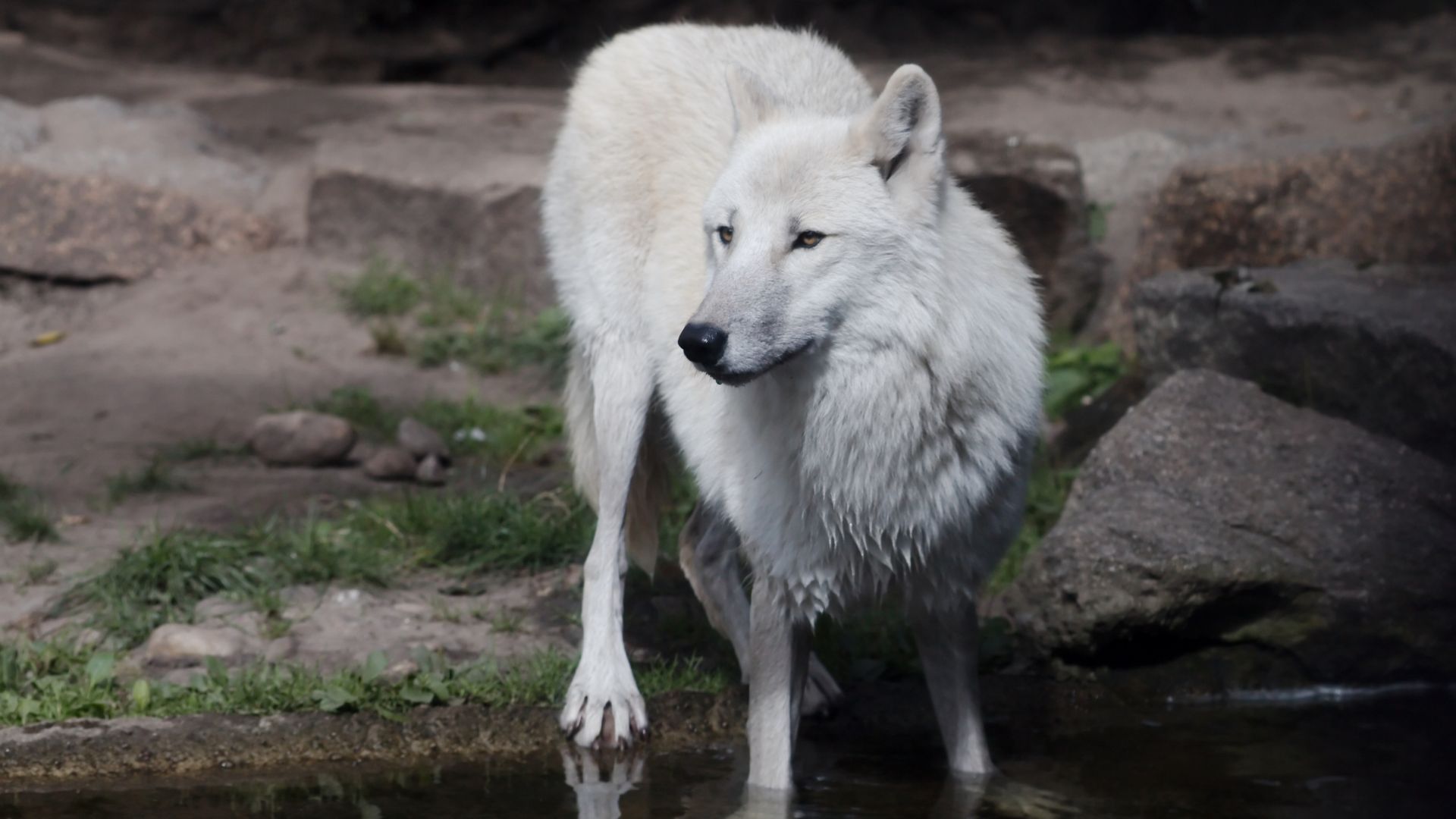
The animal kingdom is full of truly strange and wonderful stories, and a lot of them slip straight past the headlines. A quick mention in a science wire, maybe a tweet, and then they’re gone. Here are eight of the wildest examples that deserved a lot more attention. (DISCLAIMER: Slide 4 includes an image of a spider)
The “Bone Collector”
Scientists at the University of Hawai’i at Mānoa recently described a small Hawaiian caterpillar with a hobby so unsettling it sounds like something from a horror script. Nicknamed the “bone collector,” this larva hunts other insects and then sews their remains directly onto its silk casing. Legs, wings, heads. Whatever it can find.
The result is a grotesque suit of armour that does a surprisingly good job of helping it blend in. Dressed in its patchwork of dead bugs, the caterpillar sneaks past spiders to raid their webs, stealing two things at once: the prey already caught inside, and the silk itself.
What makes this even stranger is that scientists believe the behavior is completely unique to this one species. Somehow, in isolation on a single Hawaiian island, a caterpillar evolved what can only be described as a serial killer aesthetic as a survival strategy. Nature outdoes herself.
Did You Know? The “bone collector” caterpillar is one of only around 12 known species in the Hawaiian genus Hyposmocoma that have adapted to hunt other insects, but it is the only one known to wear its victims. Every other species in the genus sticks to feeding on plants or decaying matter.
Lions Have a Secret Second Roar

The lion’s roar is one of the most recognisable sounds on the planet. The MGM lion, every wildlife documentary ever made, the sound effect threaded through half the action films ever produced. That roar feels thoroughly catalogued.
For decades, a second, entirely distinct roar went unnoticed. It was only when researchers fed thousands of recorded lion vocalizations into an AI analysis system that the calls were properly sorted into categories. The second roar is flatter, shorter and far less dramatic than the version everyone recognises. It had been there the whole time, hiding in plain hearing.
By the Numbers: Lions have been studied scientifically for over 200 years, yet the AI analysis that uncovered their second roar required processing thousands of recordings simultaneously. No human researcher, listening to one call at a time, had ever flagged the pattern. It took a machine learning model trained on the full dataset to notice what ears alone had missed.
Missing an entire category of sound from one of the planet’s most studied animals raises an uncomfortable point about how well science actually knows the animals it studies.
Mice Perform First Aid on Their Unconscious Friends
In a study published in the journal Science, lab mice were placed with companions who had just been anaesthetised. The conscious mice didn’t simply sniff their sedated cage-mates and move on. They groomed them. They pawed at them and nipped them. As the unconscious mice slipped deeper under, their companions were observed opening their mouths and pulling at their tongues, apparently trying to clear their airways.
The mice that received this treatment woke up faster than those left alone. The behaviour was also noticeably stronger between mice who already knew each other. Strangers got considerably less urgent attention.
Elephants, chimpanzees and dolphins have long been documented showing compassion toward sick or injured companions. Mice, it seems, have been doing the same thing in laboratory cages. The behaviour simply went unnoticed.
A Spider That Kills by Vomiting Its Own Digestive Organs

Most spiders bite. Venom goes in, prey stops moving. The feather-legged lace weaver (Uloborus plumipes) took a different evolutionary path. Once it has a victim wrapped tightly in silk, it vomits. Not a little. It expels toxic fluid directly from its gut and coats the entire bundle in it.
The stomach-turning part is that it works just as well as conventional venom. Scientists confirmed that the lace weaver’s approach produces results comparable to the bite of a common house spider, all without a single fang involved.
The feather-legged lace weaver is found regularly in garden centres across Europe. Most people have walked past one without a second glance.
Elephants Are Secretly Responsible for Your Guitar
The connection between African elephants and ebony trees turns out to have implications that reach well beyond wildlife conservation.
Researchers identified a relationship between the two species that had been going largely unnoticed. Ebony is the dense, dark wood used in guitar fretboards and piano keys, and elephants are one of the main reasons it still exists. They eat the fruit of ebony trees, carry the seeds in their digestive tracts for miles across the forest floor, and deposit them in their dung, intact and ready to germinate. Without elephants doing this, ebony trees struggle to propagate at any meaningful scale.
So when poaching or habitat loss removes elephants from a region, the knock-on effects reach further than most people imagine. Somewhere down the line, the wood in your guitar is part of that chain. Every fretboard is, in its own quiet way, a product of an elephant’s afternoon walk through the forest.
Context: The ebony-elephant relationship is an example of what ecologists call a seed dispersal mutualism, a partnership where an animal’s digestive system does critical work for a plant’s survival. Elephants are considered megafaunal dispersers, meaning they move seeds distances that smaller animals simply cannot. When they disappear from a habitat, certain trees effectively stop reproducing.
Capuchin Monkeys Are Kidnapping Babies. Apparently for Fun

Researchers from the Max Planck Institute of Animal Behavior set up camera traps on Jicarón Island off the coast of Panama to study something relatively routine: stone tool use in capuchin monkeys. What they found on the footage was anything but.
Young male capuchins had been abducting infant howler monkeys. Not to eat them. Not as part of any obvious survival strategy. After extended observation, the researchers concluded that the behavior seemed to be driven by curiosity and, in plain terms, boredom. The island’s combination of abundant food and limited threats had given these monkeys a lot of spare time. They decided to use it in a way no capuchin had ever been recorded doing before. The fate of the howler infants varied; some survived the ordeal, though the behavior proved fatal for others.
The “Chicago Rat Hole” Wasn’t Actually a Rat
In January 2024, a comedian in Chicago photographed something odd on a pavement in Roscoe Village: a near-perfect impression of a small animal pressed into the concrete, complete with tiny splayed legs and a tail curving behind it. The image went viral almost immediately. People made pilgrimages to see it in person.
The hollow got a name, the Chicago Rat Hole, and became a genuine, if short-lived, local landmark.
Locals had known about the impression for years without anyone arriving at a definitive explanation. Earlier this year, a study published in Biology Letters finally weighed in. The culprit, the scientists concluded, was almost certainly not a rat at all. It was a squirrel. Somehow, this makes it better.
A Wolf Taught Itself to Crack Crab Traps and Steal Fish

On the coast of British Columbia, Indigenous Haíɫzaqv guardians had been noticing damage to their crab traps. The submerged traps were repeatedly disturbed or broken into. They set up a camera to determine what was responsible, expecting either sea otters or possibly curious divers.
The footage showed a female wolf swimming out to one of the submerged traps, gripping the rope in her teeth, towing the whole thing back to shore, and then methodically working the trap open to eat the bait inside.
On her own, with no instruction, she had figured out a multi-step process involving swimming to a target, retrieving it, and solving a mechanical problem to get to the food. Then she did it again. Scientists who reviewed the footage called it a striking example of individual innovation in the wild.
Research Note: The wolf footage from British Columbia is notable not just for what it shows, but for how it was found. The camera traps were set up to study something else entirely, the Haíɫzaqv guardians were trying to identify what was disturbing their crab traps. The wolf’s behavior was an accidental discovery, which raises an obvious question: how many other examples of animal problem-solving are happening right now, unseen, with no camera pointed at them?
Science keeps making the world stranger the longer you look at it. These eight stories are proof that the most astonishing animal discoveries don’t always come from the Amazon or the deep ocean. Sometimes they turn up on a pavement in Chicago, in a laboratory in London, or on a very determined stretch of Canadian coastline. The animals are paying attention. It might be worth doing the same.
You Might Also Like:
The 12 Darkest Things Animals Do to Survive
The Animals That Hold Funerals (And What Scientists Think It Means)
Sources:
“Hawaiian Caterpillar Patrols Spiderwebs Camouflaged in Insect Prey’s Body Parts.” Science, Apr. 2025.
“Roar Data: Redefining a Lion’s Roar Using Machine Learning.” Ecology and Evolution, Nov. 2025.
Sun, Wenjian et al. “Mice Exhibit Revival-Like Behaviors Toward Unconscious Conspecifics.” Science, Feb. 2025.
Goldsborough, Zoë et al. “Interspecies Infant Abduction in White-Faced Capuchin Monkeys.” Current Biology, May 2025.
Granatosky, Michael C. et al. “Rodent Indent Not Self-Evident: A Case of Mistaken Identity of the ‘Chicago Rat Hole’.” Biology Letters, Oct. 2025.
Artelle, Kyle A., and Paul C. Paquet. “Potential Tool Use by Wolves (Canis lupus): Crab Trap Pulling in Haíɫzaqv Nation Territory.” Ecology and Evolution, Nov. 2025.


Leave a Reply