Nature doesn’t always make headlines when it wins, and there are many endangered species success stories that people have never even heard of. While the bald eagle and peregrine falcon dominate conservation conversations, some of the most dramatic endangered species success stories have unfolded in limestone glades, on remote Pacific islands, and inside predator-proof fences that most people have never heard of.
These nine recoveries span fish, birds, mammals, and even a flower. Each one rewrites what we thought was possible.
1. The Oregon Chub: A Wildlife Recovery That Made History

Most people have never heard of this small freshwater minnow from Oregon’s Willamette Valley, and that’s partly why its story is so remarkable. When the Oregon chub was listed under the Endangered Species Act in 1993, only 8 known populations remained, and all were heavily fragmented by dams, agricultural runoff, and competition from invasive carp.
What followed was methodical and unglamorous: habitat protection, waterway restoration, and carefully managed reintroductions. By 2010, the number of known populations had climbed from 8 to 38.
In 2015, the Oregon chub became the first fish species ever removed from the U.S. Endangered Species List after a successful full recovery, which was a milestone with no precedent in American conservation law. It made almost no national news.
2. The Chatham Island Black Robin: A Conservation Success Story Built on One Female

By 1980, the entire global population of the Chatham Island black robin had collapsed to just 5 individuals, and only one fertile female, nicknamed “Old Blue,” was left. It remains one of the closest near-extinctions ever recorded for any vertebrate species on Earth.
New Zealand conservationists deployed a bold and controversial technique called cross-fostering: placing black robin eggs into the nests of related species to push females into laying additional clutches. It was an experimental move with no guarantee of success.
It worked. The population climbed steadily over the following decades to approximately 300 birds across Mangere and Rangatira islands. In 2022, the species was formally downlisted from Endangered to Vulnerable by the IUCN, a reclassification that would have seemed impossible when Old Blue was the last hope.
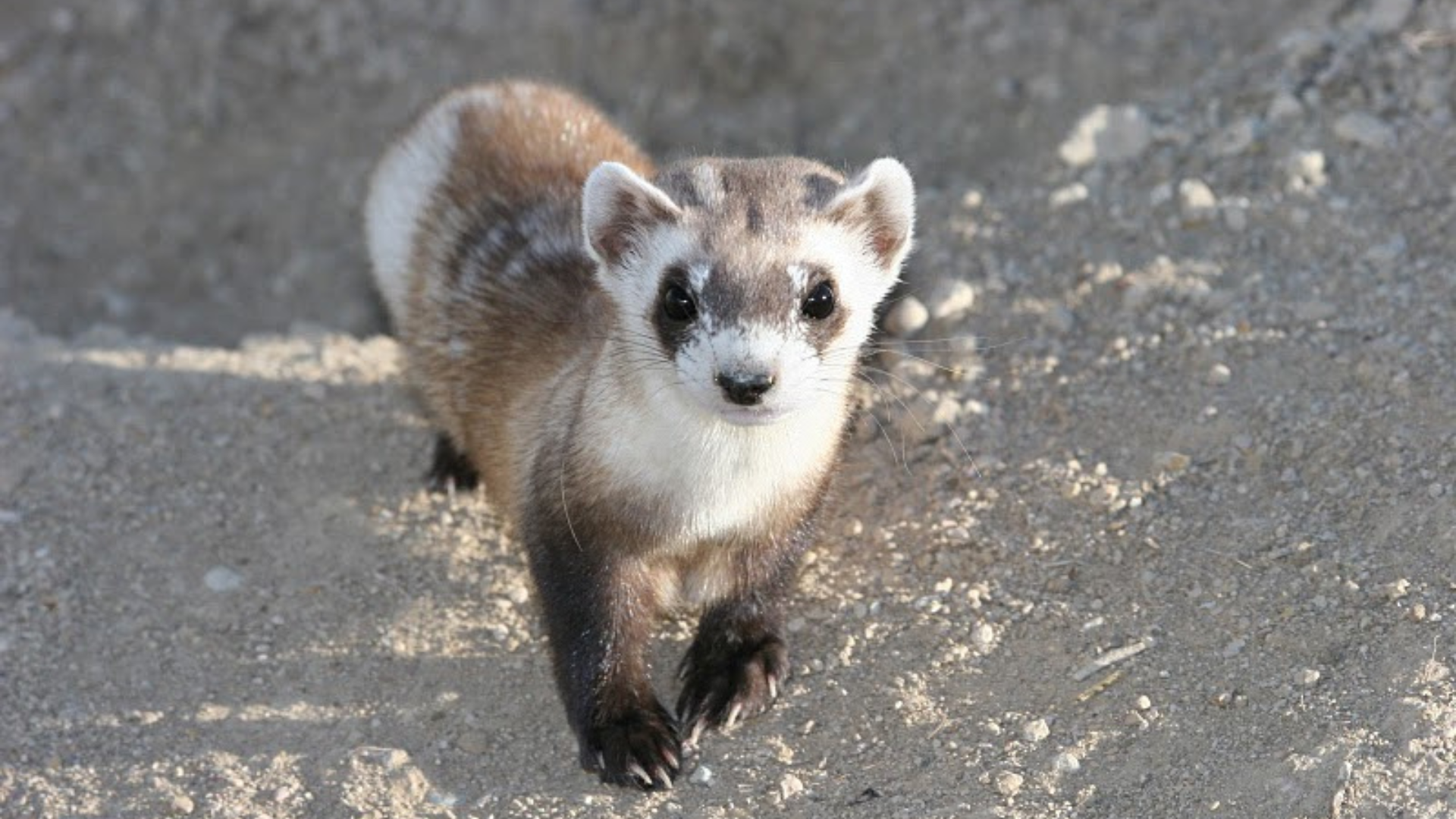
3. The Black-Footed Ferret: One of America’s Greatest Wildlife Recovery Stories

In 1979, scientists officially declared the black-footed ferret extinct. Two years later, a ranch dog in Meeteetse, Wyoming, brought one home.
The discovery of a tiny wild colony launched one of the most intensive captive-breeding programs in American conservation history. Zoologists raced to capture the remaining animals before disease could finish what habitat loss had started. By 1987, 18 ferrets had been taken into captivity. The wild population had reached zero.
From those 18 individuals, a remarkable recovery began. Reintroductions across multiple U.S. states slowly rebuilt wild populations. Today, approximately 800 black-footed ferrets live in the wild across more than 18 reintroduction sites. In a cutting-edge development, cloning technology is now being used to expand the species’ genetic diversity, one of the first applications of cloning in North American wildlife conservation.
4. Przewalski’s Horse: The Conservation Success Story of Earth’s Last True Wild Horse

Not all horses are wild horses. Mustangs, brumbies, and other “wild” horses are feral domesticated animals. Przewalski’s horse is something different entirely; it is a genetically distinct species that was never domesticated. It is the only true wild horse left on Earth.
By 1969, it had vanished from its native Central Asian range completely. Only 174 individuals survived, all in zoos. The entire future of the species rested on those captive animals.
Decades of coordinated international breeding programs eventually produced enough animals for reintroduction. Herds were returned to Mongolia’s Khustai National Park and China’s Kalamaili Nature Reserve, where they have since established self-sustaining populations. By 2025, a cloned Przewalski’s horse was at the centre of new research aimed at expanding the species’ genetic diversity further, bringing one of conservation’s longest-running success stories into the genomic age.
5. The Arabian Oryx: The Wildlife Recovery That Reversed Global Extinction

The Arabian oryx was hunted to complete extinction in the wild by 1972. Largely driven by trophy hunting and poaching, it became the first animal officially listed as Extinct in the Wild by the IUCN. At the time, it was considered a symbol of what unchecked hunting could permanently destroy.
But conservationists had been planning ahead. “Operation Oryx,” launched in 1962 by the Fauna Preservation Society, captured some of the last wild individuals before they disappeared and established a captive breeding herd. Over the following decades, breeding programs in the United States and Middle East slowly grew the population.
Reintroduction efforts in Oman, Jordan, Israel, Saudi Arabia, and the UAE gradually rebuilt wild herds. In 2011, the Arabian oryx was formally downlisted from Extinct in the Wild to Vulnerable, becoming the first species in IUCN history to achieve that reversal. More than 1,000 Arabian oryx now live wild on the Arabian Peninsula.
6. The Island Night Lizard: A Conservation Success Story Nobody Reported

The island night lizard will never headline a wildlife documentary. It is slow, small, and unspectacular by most measures. But for decades, it was quietly disappearing from California’s Channel Islands, outcompeted and preyed upon by invasive goats, pigs, rabbits, and feral cats that humans had introduced centuries earlier. It was listed as threatened in 1977 and largely forgotten.
What turned things around wasn’t a dramatic rescue mission. It was the unglamorous work of invasive species removal, systematically eliminating feral animals from island habitats over several decades. As the introduced predators disappeared, the lizard simply recovered on its own.
Population surveys on San Clemente Island alone eventually found an estimated 21.3 million individuals. The species was officially delisted in 2014, one of the quietest, most lopsided conservation victories in U.S. history, almost entirely unreported outside of scientific literature.
7. Tennessee Purple Coneflower: A Plant Conservation Success Found on a Roadside

For years, botanists believed the Tennessee purple coneflower no longer existed. Then in 1968, it was rediscovered growing in a cedar glade, a scrubby, limestone flat habitat that most people drive past without a second thought. It wasn’t a rainforest or a mountain range. It was a roadside weed patch in Middle Tennessee.
That rediscovery triggered one of the quieter plant conservation efforts in U.S. history. Over the following decades, scientists worked to identify, protect, and expand remaining populations through habitat preservation, seed banking, and controlled propagation. Progress was slow. Plants don’t move. Colonies have to be built one at a time.
By 2011, the Tennessee purple coneflower had established 19 secure colonies across 6 populations, enough to justify full removal from the Endangered Species List. It remains one of the very few plant species in American conservation history to achieve complete delisting after a documented extinction scare.
8. The Brush-Tailed Bettong: Australia’s Most Recent Endangered Species Success Story

The brush-tailed bettong, a small, rat-kangaroo-like marsupial native to Australia, was once declared regionally extinct across most of its mainland range. The culprit was familiar: introduced foxes and feral cats, against which Australia’s native fauna had no evolutionary defence.
Its comeback centred on a single, bold piece of infrastructure: a 25-kilometre predator-proof sanctuary fence on South Australia’s Yorke Peninsula. Inside the fence, foxes and cats were eliminated. Inside the fence, bettongs could breed without being eaten. The concept was simple. The execution took years.
The results were dramatic enough to shift the species’ entire conservation trajectory. In January 2025, the IUCN formally reclassified the brush-tailed bettong from Critically Endangered to Near Threatened; a multi-step improvement that represents one of the most significant recent wins in Australian wildlife conservation. It made almost no international headlines, making it perhaps the freshest overlooked entry on any list of endangered species success stories published today.
9. South Island Saddleback: A Wildlife Recovery 58 Years in the Making

In 1964, the entire population of the South Island saddleback, a striking black-and-chestnut New Zealand bird, had been reduced to just 36 individuals, all living on a single small island called Big South Cape Island. One disease outbreak, one shipwreck introducing rats, one storm, and the species would have been gone.
Conservation teams moved fast. Birds were translocated to additional predator-free offshore islands, creating backup populations. Then they did it again. And again. Over 58 years, the saddleback’s range was painstakingly expanded one island at a time, always staying ahead of the predator threats that had destroyed mainland populations.
In 2022, the South Island saddleback was reclassified to Least Concern, the highest possible IUCN conservation status, and a designation that means a species faces no significant extinction risk. From 36 birds on a single island to Least Concern in 58 years. It is the most complete recovery arc on this entire list of endangered species success stories, and a fitting reminder that patience, persistence, and a good fence can do what headlines cannot.
Endangered Species Success Stories

None of these recoveries happened because of a single heroic moment. What connects an Oregon minnow to a New Zealand bird to an Arabian oryx is decades of unglamorous, methodical work, habitat surveys, captive breeding logs, fence inspections at dawn, carried out by people most of us will never know the names of.
The bald eagle gets the poster, while these species get the footnote.
But the footnote is where some of the most consequential conservation biology of the last century actually happened. Recovery isn’t theoretical. It has happened. Quietly, without headlines, and against almost impossible odds. Did you enjoy these 9 endangered species success stories? Let us know in the comments!
Sources:
“Endangered and Threatened Wildlife and Plants; Removing the Oregon Chub from the Federal List of Endangered and Threatened Wildlife.” Federal Register / U.S. Fish & Wildlife Service, 19 Feb 2015.
“Arabian Oryx (Oryx leucoryx) — IUCN Red List of Threatened Species 2011 Update.” International Union for Conservation of Nature, 2011.
“Black-Footed Ferret Recovery.” U.S. Fish & Wildlife Service, 2024.
“Table 7: Species Changing IUCN Red List Status (2024–2025).” IUCN Red List of Threatened Species, 2025.


Leave a Reply