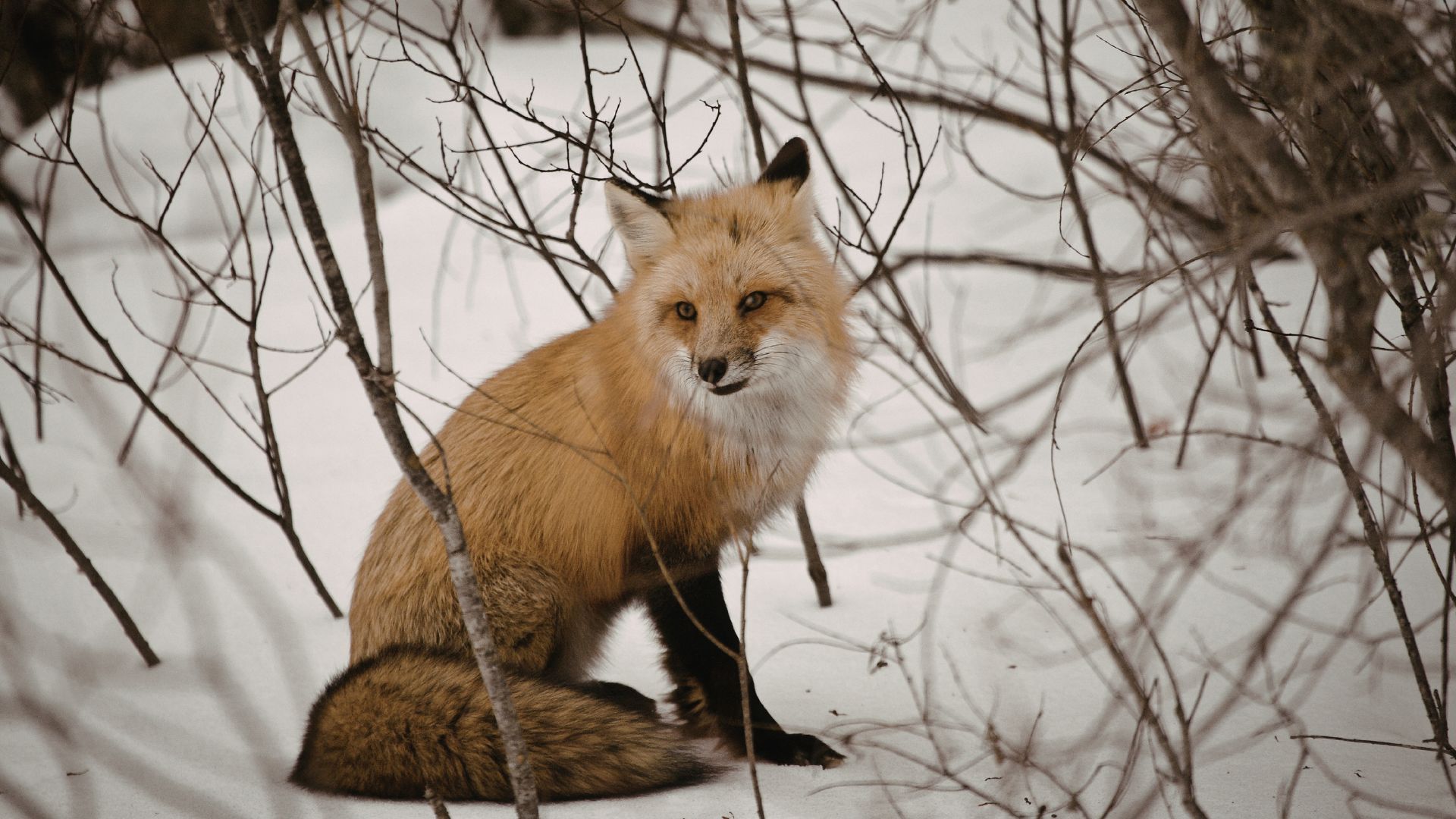
Chernobyl’s forests are now packed with moose, wolves, lynx and even wild horses, and yet decades of monitoring have found surprisingly limited evidence that chronic low‑level radiation is devastating most animal populations there. Instead, the emerging picture from recent Chernobyl wildlife research is more nuanced: radiation clearly caused acute damage in the early years and still leaves genetic scars in sensitive species, but for many animals today the biggest ecological force is the absence of humans rather than the presence of fallout.
Chernobyl wildlife: a radioactive refuge without people

When reactor 4 at the Chernobyl nuclear power plant exploded in 1986, fallout contaminated thousands of square kilometers across Ukraine and Belarus, forcing a rapid evacuation and leaving behind the Chernobyl Exclusion Zone (CEZ), an area roughly the size of a small country. For humans, parts of this landscape remain far too contaminated for normal life, but for wildlife, the enforced removal of farms, roads and hunting pressure created one of Europe’s largest de‑facto nature reserves almost overnight.
On helicopter counts, track surveys and camera traps, large mammal numbers in the Belarusian part of the CEZ increased in the years after the accident, with no sign that contamination gradients were suppressing the overall abundance of elk, deer, wild boar, or wolves. One widely cited census reported “no evidence of a negative influence of radiation on mammal abundance” when comparing different parts of the zone with protected areas elsewhere in Belarus, suggesting that once freed from constant human disturbance, many species expanded despite chronic exposure.
Perhaps the most counterintuitive finding for international audiences is that Chernobyl now supports thriving populations of species that are declining or heavily persecuted elsewhere. Wolves patrol the ghost villages in densities comparable to or higher than in natural reserves, brown bears have recolonized after being absent from the region for more than a century, and European bison roam former collective farms that would have been impossible habitat for them when people lived there. This is why several ecologists argue that, on a population level, for many large vertebrates, humans remain more damaging than the remaining radiation.
Chernobyl wildlife and radiation: what the “limited damage” really means
Saying that Chernobyl wildlife shows “limited evidence of long‑term radiation damage” does not mean that radiation was harmless; it means that the most severe ecological impacts were mostly short‑lived and highly localized, and that many species have since recovered at the population level. Immediately after the accident, intense radiation close to the plant killed trees and animals outright, with one famous “Red Forest” of conifers turned rust‑colored by acute exposure and later replaced by new growth.
As contamination levels dropped and radionuclides decayed or migrated, chronic exposure remained, but at far lower dose rates, generally below thresholds where whole populations of wild animals are expected to show deterministic radiation effects such as widespread sterility or catastrophic birth defects. Reviews of radiation dose–response data for wild flora and fauna suggest that most species tolerate chronic low‑linear energy transfer exposure up to around 0.5–1 milli-gray per day before clear population‑level damage appears, and many parts of the CEZ now fall below this band.
Field studies back this up for several groups. Camera‑trap surveys of mid‑ to large‑sized carnivores and boar found no discernible relationship between contamination levels and where these animals occur today, implying that radiation gradients are not the main driver of their current distribution. Likewise, long‑term monitoring of large mammals in Belarusian sectors has not detected systematic declines in abundance linked to background radiation once human pressure is removed.
However, some researchers who focus on individual‑level health argue that subtle radiation damage is widespread even if raw headcounts look healthy. Studies of birds, small mammals, and invertebrates have reported elevated mutation rates, immune changes, cataracts, and tumors in more contaminated patches, along with lower densities or reduced breeding success for radiation‑sensitive species. The key nuance for an international audience is that Chernobyl wildlife can be both numerically abundant and biologically affected at the same time: populations may be large because human threats vanished, even while individual bodies quietly carry genetic and physiological scars.
Hidden stories: Chernobyl wildlife, adaptation and “natural experiments”

Beyond headline claims about “mutant animals”, the most intriguing Chernobyl wildlife research now looks at long‑term adaptation and ecological rewiring under chronic contamination. The CEZ has effectively become a vast, accidental natural laboratory where scientists can watch evolution, community shifts and ecosystem processes unfold in slow motion under an unusual mix of stress and freedom from people.
One of the lesser‑known lines of work focuses on physiological and genetic adaptations that may help some organisms cope with long‑term exposure. Studies on birds in high‑radiation patches have reported changes in antioxidant systems and pigment production, consistent with selection for individuals that better neutralise radiation‑induced oxidative stress. For plants, recent reviews highlight a balance between radiation‑induced genetic instability and adaptive responses, with some populations showing chromosomal aberrations while still persisting and reproducing for decades in contaminated soils.
Chernobyl’s famous feral dogs add another unexpected dimension to this story. Recent genetic work on distinct dog populations within and around the plant complex has shown that they are a powerful model for tracing how long‑term, low‑dose ionizing radiation and harsh living conditions shape genomes over multiple generations. Contrary to viral narratives of grotesque “mutant dogs”, the real interest lies in subtle shifts in genetic diversity, DNA repair pathways, and population structure that may illuminate how mammals, including humans, respond to chronic environmental contamination.
On the ecosystem side, some researchers argue that Chernobyl and Japan’s Fukushima region together may be seeding a “new ecology” in which traditional rules about disturbance, succession and predator–prey dynamics are altered by the twin forces of radiological stress and human absence. For example, large carnivores appear to have taken advantage of human withdrawal to expand, potentially reshaping herbivore behaviour and vegetation patterns, while more sensitive taxa such as certain birds, insects and small rodents may decline or adapt in complex, patchwork ways. For global conservation scientists, these long‑term experiments are uncomfortable but invaluable, offering data on how ecosystems might respond to future nuclear accidents or other chronic, low‑grade pollutants.
Chernobyl wildlife versus human impact: why people matter more than radiation
One of the most striking messages from Chernobyl wildlife studies is how powerful human presence, or its removal, can be compared with radiation itself. In many parts of the world, large mammals disappear long before pollution reaches anything like Chernobyl’s levels, due to hunting, habitat fragmentation, roads, and disturbance, yet in the CEZ these species have rebounded despite measurable contamination.
Several analyses have explicitly compared animal abundance across contamination gradients with areas outside the zone. For large mammals in particular, researchers have repeatedly concluded that there is no clear negative effect of radiation on overall numbers and that reduced human pressure is the dominant driver of recovery. Jim Smith, an environmental scientist and author of a new study of life near Chernobyl, summarized this by noting that, “We’re not saying the radiation levels are good for the animals; we know it damages their DNA, but human habitation and development of the land are worse for wildlife,” which is a provocative but well‑supported statement given the data.
This does not mean that Chernobyl is a model conservation strategy; deliberately contaminating landscapes would be ethically indefensible and environmentally reckless. Instead, the CEZ acts as a stark case study of trade‑offs that global audiences rarely see quantified. It suggests that, up to a point, wildlife may tolerate certain chronic stresses if other, more immediate threats from humans are removed, a lesson that is particularly relevant as expanding infrastructure and land use push species into ever‑smaller fragments worldwide.
For international wildlife policy, Chernobyl underscores the importance of large, connected areas where hunting, logging, and development pressures are low. The CEZ is accidentally protected by fear and fences, but its wildlife boom hints at what might be possible in deliberately created transboundary reserves and rewilded landscapes, without the radiation.
What Chernobyl wildlife teaches us about risk, resilience and future accidents

Four decades after the disaster, Chernobyl wildlife research offers a more complex story than the familiar images of glowing forests and monstrous animals. At the landscape scale, surveys show vibrant communities of large mammals and a surprising richness of species, with limited evidence that chronic radiation is currently suppressing the abundance of many iconic animals compared with human‑dominated regions. At the same time, detailed work at the level of genes, cells and individual organisms reveals real and ongoing biological costs in more sensitive species, from higher mutation rates to reduced reproductive success.
This tension between resilience and vulnerability has several implications for how societies think about nuclear risk. First, it challenges simple narratives of permanent dead zones or universal mutational catastrophe, showing that even badly contaminated landscapes can remain ecologically functional and even rich in wildlife. Second, it highlights that low‑dose, long‑term exposure is difficult to study and easy to misinterpret: broad head‑counts can hide subtle genetic damage, while small‑scale health studies can overstate ecosystem‑level collapse if they ignore the broader context.
Finally, Chernobyl wildlife studies provide rare, real‑world data that can refine radiation protection guidelines for both people and nature. By comparing dose rates, species sensitivities and ecological outcomes in the CEZ with other high‑radiation environments, regulators and scientists can design better thresholds for future accidents, medical exposures or industrial releases. For a global public accustomed to dramatic images but not to long‑term monitoring graphs, the story from Chernobyl’s forests is both unsettling and unexpectedly hopeful: life can adapt and even flourish in places we once wrote off, but it does so with scars that only careful science can see.
You Might Like:
Ocean Plastic Is Being Eaten by a Newly Discovered Bacteria. Now What?
Rewilding Wolves in Europe Made Butterflies More Colorful. Here’s Why
Scientists Studying Elephant Communication Behavior Have Caught Elephants Lying to Each Other
Sources:
“Chernobyl: Chapter VI. Agricultural and Environmental Impacts.” Nuclear Energy Agency (OECD‑NEA), 2002.
“Animals Rule Chernobyl Three Decades After Nuclear Disaster.” National Geographic, 2016.
“Chernobyl’s Wildlife: The Real Story Isn’t the Presence of Radiation, It’s the Absence of Humans.” The Conversation, 22 Apr 2026.
“Long‑Term Wildlife Impacts at Chornobyl, Fukushima May Yield ‘a New Ecology’.” Mongabay, 20 Dec 2023.
“Tracking Chernobyl’s Effects on Wildlife.” Nature, 11 Jul 2021.
“Radiation‑Induced Effects on Plants and Animals: Findings of the United Nations Chernobyl Forum.” EPIC database synthesis (via Academia.edu), 2006.


Leave a Reply