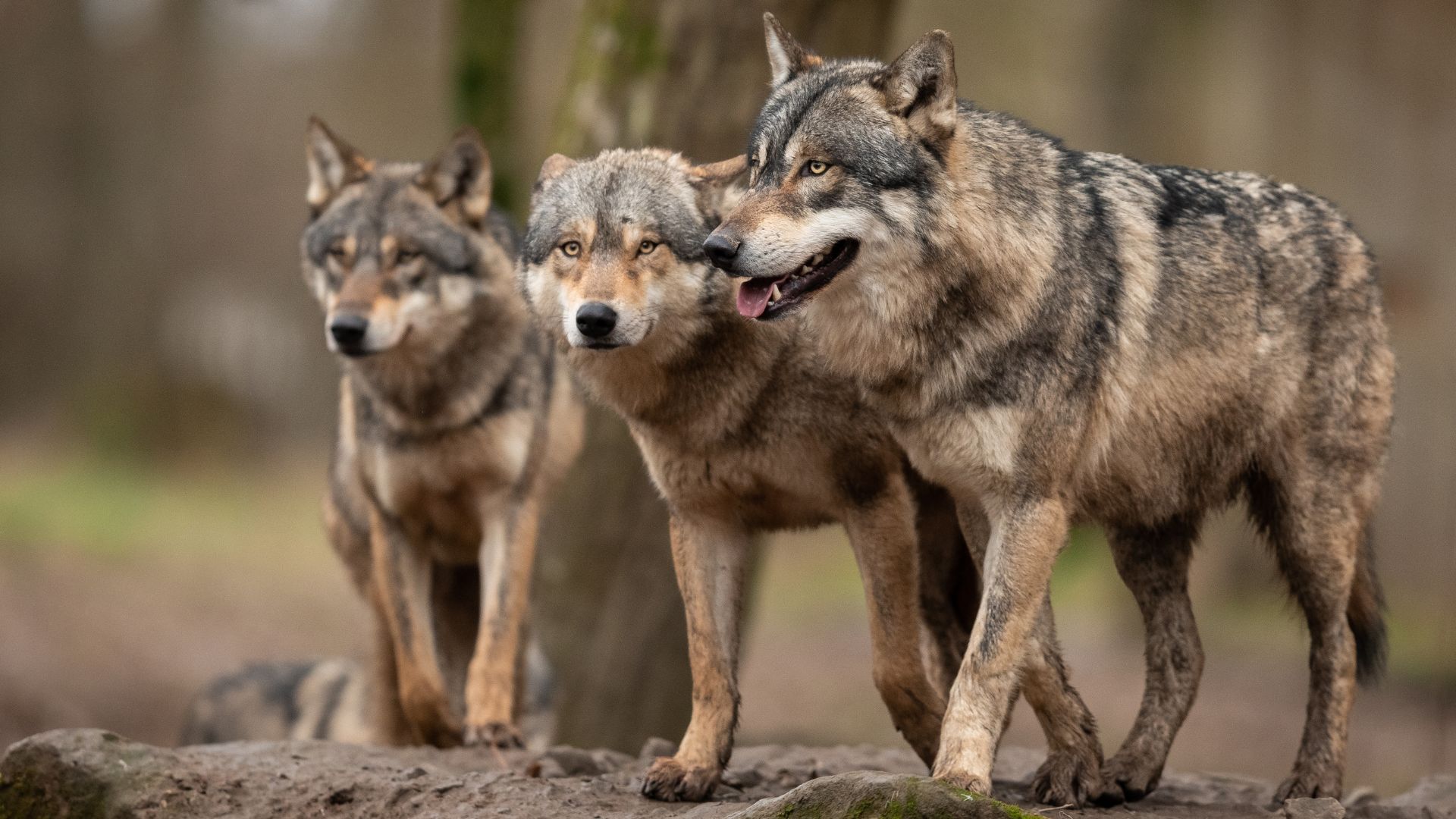
When wolves returned to parts of Europe, people watched the forests, deer, and even rivers change. But few people expected that one of the winners of this experiment would be butterflies, and, indirectly, their colors.
To understand how a predator at the top of the food chain can reshape the patterns on a butterfly’s wing, you need to follow the story across real landscapes, from the Carpathian Mountains to Iberia and the rewilding hotspots of Western Europe.
Rewilding Wolves and the Carpathian Story: Predators, Meadows and Wings

The Southern Carpathians in Romania are one of Europe’s great strongholds for large carnivores like wolves, bears, and lynx, which still patrol vast forested mountains and high pastures. Here, rewilding wolves is about protecting an ancient relationship between predators, wild herbivores, and people.
In remote valleys, wolf packs keep red deer, roe deer, and wild boar constantly on the move. This movement is extremely important. Deer no longer linger for hours in one place, stripping every sapling and flower they can reach. Instead, they browse briefly and move on, creating what ecologists call a “landscape of fear”: a patchwork of areas where herbivores feed lightly and quickly, always aware that a predator might be watching.
Because of this, young trees and shrubs are more likely to survive, wildflowers face less intense grazing, and tall herbaceous plants and berry bushes can flourish, creating a rich, layered vegetation structure.
In summer, these Carpathian clearings and hay meadows are alive with butterflies, including blues, fritillaries, admirals, and more. Many of these species depend on specific wildflowers and host plants for their caterpillars. When those plants are allowed to grow taller and flower fully, butterflies don’t just increase in number; their communities become richer and more varied. To a visiting naturalist, it looks like the landscape itself has turned up the saturation.
A Narrative from Western Europe: Rewilding Wolves and Meadow Mosaics

If you move on to the west, this story looks different, but the underlying pattern is similar. In many parts of Western and Central Europe, wolves disappeared for more than a century. Their slow return through natural recolonization and expanding protection is reshaping the countryside that, for decades, was governed mainly by agriculture and hunting.
Take a hypothetical river valley in the Alps or Apennines where wolves have recently recolonized. Before their return, high deer numbers had left riverbanks overgrazed and trampled. Young willow, alder, and other shrub seedlings were repeatedly browsed and struggled to take hold, while wildflower patches remained sparse, as they were often eaten before they could set seed.
Once wolves have established their territory in the area, two things begin to happen at once: deer numbers gradually fall, and their behavior starts to shift. They stop spending long, relaxed hours in open meadows and river corridors, which are often the most dangerous places, and instead feed more cautiously, usually in denser cover and for shorter periods.
Over several years, that shifts the structure of the valley: shrubs and saplings along the riverbank survive and create dappled shade, wet meadows develop a more diverse mix of grasses, sedges, and flowering plants, and edges between forest, scrub, and open grassland become more irregular.
For butterflies, these “messy” edges and mosaics are gold. Different species use different parts of the gradient: some breed on sun-baked patches of bare soil, others on tall forbs in half shade, others in cooler, damp hollows near the water. The overall result isn’t just more butterflies; it’s a more colorful, more structurally varied butterfly community.
If you visit a valley like this in peak summer, you’re struck by the impressionistic mix of color, like orange and black fritillaries over wet meadows, metallic blues on dry slopes, and pale yellows and whites along shrub edges. Projects such as Rewilding Apennines show how the predator’s presence has reorganized the canvas that butterflies depend on.
Iberia and Beyond: Rewilding Wolves in Human Landscapes

In parts of Spain and Portugal, rewilding wolves is tightly intertwined with traditional pastoralism. Here, wolves move through a mosaic of cork oak, scrub, farmland, and upland pasture. Conservationists working on these projects are trying to stabilize or recover wolf populations while reducing conflict with farmers through guard dogs, improved fencing, and compensation.
Where coexistence is managed well, wolves help prevent overabundant ungulate populations, including wild boar and deer, from degrading sensitive habitats. Iberian dehaze landscapes and upland meadows can then maintain richer ground cover and more diverse herb layers. That means that there is more nectar for adult butterflies and more host plants for larvae.
This mix of human land use and wild processes creates some of Europe’s most biodiverse cultural landscapes. Butterflies become a subtle indicator species: when rewilding wolves is working in balance with grazing and farming, you see more species, brighter displays of color, and longer flight periods through the season because there are enough resources to support multiple generations.
How Rewilding Wolves Can Make Butterflies “More Colorful”
So how does all this translate specifically into the idea that Rewilding Wolves makes butterflies more colorful, not just more numerous?
There are several mechanisms at play, operating over years and generations:
- Richer diets for caterpillars
Many butterflies rely on particular host plants for their larvae. When wolves reduce chronic over-browsing, those plants grow taller, flower more, and sometimes expand their range. Better plant abundance and quality often lead to better nutrition for caterpillars, which can influence the intensity of adult coloration and patterning. - More varied microclimates
Rewilded landscapes tend to have more structural diversity, like shaded corners, sunny clearings, damp hollows, and breezy ridges. Conditions during larval and pupal development, like temperature, humidity, and sun exposure, affect how pigments and structural colors are expressed on the adult wing. A more varied landscape can encourage greater diversity in color forms and patterns. - Stronger selection for visual signals
As habitats become more complex, so do interactions with predators like birds. Over time, this can sharpen the effectiveness of warning colours in toxic species and refine camouflage in others. The end result is a community-level increase in visual diversity and contrast.
You can think of rewilding wolves as turning a simplified grassland into a layered ecosystem. On that richer stage, butterflies have more ways to be colorful, literally, in their pigments, and figuratively, in the diversity of forms present.
Rewilding Wolves, People and the “Butterfly Effect” for Rural Economies

There’s another narrative thread that often gets overlooked: how rewilding wolves, butterflies, and rural communities are linked.
In rewilding landscapes, from the Carpathians to the Iberian Peninsula and emerging projects in Western Europe, wolves act as flagship species. Their presence draws wildlife tourists, photographers, and nature enthusiasts. Those visitors don’t only come for the wolves. They come for intact, vibrant landscapes with birds, flowers, butterflies, and the sense of being in a place where ecological processes are still running on their own terms.
Local guides who take people to listen for wolves at dusk might spend daytime hours showing guests flower-rich meadows buzzing with insects. Accommodation providers, small restaurants and local craftspeople all benefit when nature-based tourism grows. In this way, the benefits of rewilding wolves turn ecological recovery into economic opportunity.
Of course, there are some conflicts, especially where livestock is vulnerable and preventive measures are lacking. The most promising stories of rewilding wolves in Europe are those where conservationists, farmers, and local authorities collaborate on coexistence, like investing in guard dogs, shepherding, fencing, and fair compensation. In those places, the same landscapes that support wolves and colorful butterflies can also support resilient human communities.
FAQ: Rewilding Wolves, Butterflies and Biodiversity
Do wolves help pollinators?
Yes, indirectly. Rewilding wolves can reduce overgrazing by deer and other herbivores. When grazing pressure drops and becomes more patchy, wildflowers and flowering shrubs recover. That means that there is more nectar and pollen for bees, butterflies, and other pollinators. Wolves don’t interact with pollinators directly, but by reshaping herbivore behavior, they help create and maintain the diverse, flower-rich habitats that pollinators need.
How does rewilding wolves change butterfly habitats?
Rewilding wolves changes where and how long deer and other large herbivores feed. Instead of overgrazing open meadows and riverbanks, herbivores move more, leaving some areas lightly browsed or untouched for longer. Over time, this allows shrubs, grasses, and wildflowers to form a more complex structure. Butterflies benefit from this mix of tall and short vegetation, sun and shade, wet and dry zones, exactly the kind of “messy” mosaic that supports many species.
Can rewilding wolves really affect butterfly colors?
Not in the sense of an overnight transformation. But over years, rewilding wolves can influence butterfly colors indirectly by changing diet quality, microclimates and predator–prey dynamics. Better host plants and more varied conditions during development can intensify or subtly alter wing colors and patterns in butterfly populations. The result is often a richer, more colorful community of species across the landscape.
Is rewilding wolves good for farmers?
It depends on how it’s done. Rewilding wolves can bring ecosystem benefits, like healthier forests, more natural control of deer and wild boar, and improved habitats for pollinators, which support agriculture in the long term. But without proper coexistence measures, farmers can suffer livestock losses and feel the burden of conservation. Successful rewilding wolf projects usually include:
- Guard dogs and improved fencing
- Support for traditional shepherding
- Compensation schemes and community involvement
When these are in place, the ecological gains, including better pollinator habitats, can be balanced with rural livelihoods.
Where is rewilding wolves happening in Europe?
Rewilding wolves is most advanced where wolves are either returning naturally or being actively protected: the Carpathians in Eastern Europe, parts of Iberia, the Italian and French Alps, and growing areas in Central and Western Europe. In many of these regions, wolf recovery is accompanied by broader rewilding efforts, restoring river systems, reducing intensive land use, and promoting nature-based tourism, which together support butterflies, pollinators, and wider biodiversity.
Articles You Might Like:
Scientists Are Desperately Copying Whale Songs in a Last-Ditch Effort to Save the Ocean
The Serengeti Would Collapse Without One Tiny, Unglamorous Insect
Endangered Species Success Stories: 9 Stories You Might Not Have Heard Of
Sources:
“The Return of the Wolf in Europe: Working Towards Coexistence.” Rewilding Europe, 12 Nov 2025.
“Continuing Recovery of Wolves in Europe.” PLOS Sustainability and Transformation, 24 Feb 2025.
“Rewilding: Restoring the Breathtaking Abundance of Life.” Rewilding Europe, 31 Aug 2025.
“Protecting and Restoring Europe’s Wild Pollinators and Their Habitats.” European Environment Agency, 17 Jun 2025.
“The Revival of Wolves and Other Large Predators and Its Impact on Agriculture and Rural Regions of Europe.” European Parliament Study, 2018.
“Ecological Effects of Wolves in Anthropogenic Landscapes.” Frontiers in Ecology and Evolution, 7 Jan 2021.



Leave a Reply