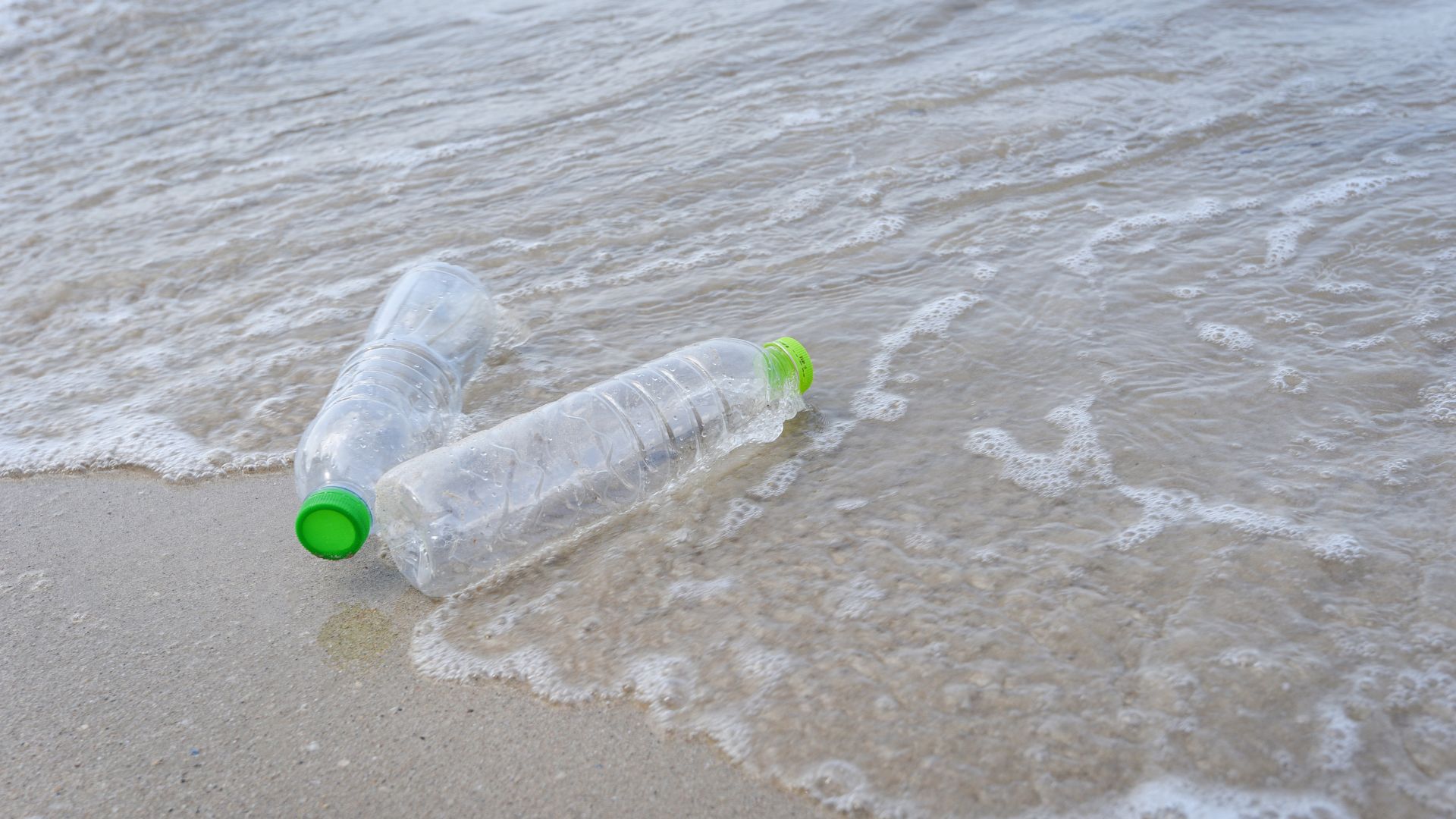
Trillions of pieces of plastic now float on and below the surface of the world’s oceans, from the Great Pacific Garbage Patch to remote polar seas. For decades, scientists assumed most of this ocean plastic would stick around for centuries, slowly fragmenting into microplastics but never truly disappearing.
However, that view is starting to shift. Several research teams have now found marine bacteria that can latch onto plastic, colonize its surface, and digest it using specialized enzymes. In other words, some microbes have begun to treat ocean plastic as just another carbon-rich food source in an otherwise nutrient-poor environment.
A large-scale study led by King Abdullah University of Science and Technology (KAUST) found that genes for plastic-degrading enzymes are widespread in the global ocean and especially abundant where plastic pollution is highest. This suggests that our plastic waste is actively driving microbial evolution, selecting for bacteria that can exploit this new “plastic buffet”.
Meet the Plastic-Eating Ocean Bacteria: What They Actually Do to Ocean Plastic

In 2016, a now-famous bacterium was discovered. Ideonella sakaiensis can break down PET, the plastic used in drink bottles and many synthetic fabrics. While that strain was found in a recycling plant on land, related enzymes and capabilities are turning up in the sea, where other bacteria carry PET-degrading enzymes with similar functional features.
In the KAUST-led global ocean survey, scientists identified a distinctive “M5 motif” in marine PET-degrading enzymes. It is a kind of molecular fingerprint that marks enzymes that are truly capable of attacking PET. Bacteria carrying this motif were shown in lab tests to efficiently break down PET samples, converting them into smaller chemical building blocks that other microbes can then consume.
Another line of research, highlighted in environmental and scientific coverage, suggests that microbes can convert plastic-derived compounds into gases such as methane and hydrogen under certain conditions, which could in principle be harnessed as energy sources, though these applications are still highly experimental and mostly land-based rather than deployed in the open ocean.
More recently, MIT researchers examined how natural ocean bacteria collaborate to break down a widely used biodegradable plastic. They found one species, Pseudomonas pachastrellae, that “unzips” the plastic polymer into three chemical components, while other bacteria specialize in consuming each of those chemicals. Using CO₂ production as a metric, they showed that complete mineralization only happened when the full community of bacteria was present.
This is one of the radical insights that doesn’t often make headlines: in the ocean, plastic degradation is usually a community effort, not the work of a single “super-bug”.
The Hidden Microbiome on Ocean Plastic: A Floating City of Life
Every piece of ocean plastic quickly develops a biological “halo” called the plastisphere, which is a slimy biofilm of bacteria, algae, and tiny animals. Within this film, plastic-eating microbes occupy a special niche. They anchor to the surface, excrete enzymes that chip away at the polymer, and share the resulting feast with neighboring species.
In nutrient-poor open oceans, this can give them a powerful competitive advantage: plastic becomes a stable, long-lasting scaffold and food source in a water column where carbon is often scarce. The KAUST study concluded that marine microbes are “genetically primed” to use plastic as a novel carbon source, which is an evolutionary response emerging within just a few decades of large-scale plastic pollution.

There’s also a darker side: the plastisphere can act as a raft for pathogens and invasive species, helping them travel across ocean basins. Plastic-eating bacteria could help shrink these rafts over time, but in the short term, the biofilms they form can also harbor harmful organisms.
Can Plastic-Eating Bacteria Really Clean Up Ocean Plastic on Their Own?
It’s tempting to imagine these microbes as a free clean-up crew that will eventually erase ocean plastic from the planet. But, current evidence suggests that’s unrealistic.
First, most documented plastic-eating bacteria and enzymes are highly specific: many are tuned to PET or particular biodegradable plastics, and they may not attack the polyethylene and polypropylene that dominate floating marine debris. The MIT team, for example, showed that their five-bacteria community could fully mineralise one type of biodegradable plastic but not a different plastic at all.
Second, degradation rates in the wild are slow. Even when lab strains are optimized, they typically work under controlled temperatures and conditions that rarely exist in the open ocean. Sunlight, cold water, and wave action can actually make plastics more brittle, sometimes helping microbes, sometimes turning items into more microplastics before biology can catch up.
Third, there’s the question of byproducts. Both natural and engineered systems can break plastic down into carbon dioxide, organic acids and, in some specialized setups, methane or hydrogen. While CO₂ or organic acids may be manageable in small amounts, large-scale release of methane, which is a potent greenhouse gas, could create new climate risks if it is not carefully controlled.
In short: plastic-eating bacteria are an important piece of the puzzle, but they are not a silver bullet for ocean plastic pollution.
Bioengineered Bacteria and Ocean Plastic: From Wild Discovery to Targeted Tools
Beyond discovering natural strains, researchers are now re-designing microbes specifically to tackle plastic waste, including in saltwater conditions. The U.S. National Science Foundation, for instance, has reported work on genetically modifying a marine microorganism so it can efficiently break down PET microplastics in saltwater. Scientists can tune enzymes for faster activity, target specific polymers, and design organisms that are easier to contain and manage.
There is also growing interest in combining mechanical collection of ocean plastic with biological treatment after capture, for example, using plastic-degrading enzymes or microbes in controlled facilities to break down recovered debris into simpler, safer compounds instead of landfilling or incinerating it. This kind of hybrid strategy is appealing for international regulators because it offers visibility and control. You know where the plastic is, where the biological tools are deployed, and what happens to the breakdown products.
How Plastic-Eating Bacteria Could Reshape the Future of Plastics

One of the least-discussed but most intriguing implications is upstream: what these bacteria teach us about designing better plastics in the first place.
The KAUST team’s discovery of the M5 motif effectively provides a genetic “flag” for PET-degrading enzymes. This can be used, along with other computational tools, to search environmental DNA for new enzymes that might specialise in different plastics or work under different conditions.
At the same time, industrial and academic teams are working on plastic-eating enzymes and microbes not just to destroy plastic waste, but to turn it back into high-quality raw material, a process called enzymatic recycling. While most of this work is still land-based, insights gained from plastic-degrading bacteria, including those found in marine environments, could guide the design of plastics that are durable in use but readily broken down by specific enzymes after collection.
Recent research has also identified new bacterial enzymes that help microbes feed on plastic-derived compounds such as ethylene glycol, a breakdown product of PET. These advances point toward future plastic economies where more of the carbon in plastics comes from and returns to controlled biological cycles, reducing reliance on fossil fuels and lowering CO₂ emissions linked to plastics manufacturing.
In that scenario, ocean plastic becomes a legacy problem that we actively mine and metabolize.
The Risks of Letting Bacteria Handle Ocean Plastic Unsupervised
It’s crucial to understand that not every country views plastic-eating bacteria and related biotechnology with the same enthusiasm. Environmental agencies and communities are asking hard questions:
What happens if engineered bacteria escape into the wider marine ecosystem and start attacking infrastructure, fishing gear, or natural polymers?
Could rapid microbial breakdown of ocean plastic release harmful additives, heavy metals, or microplastics faster than ecosystems can absorb them?
Who is legally responsible if a bioengineered clean-up system causes unforeseen ecological damage in international waters?

Regulators are responding by framing plastic-eating microbes and enzymes as tools that must be tightly governed. At the international level, discussions around the emerging Global Plastics Treaty emphasize that innovative clean-up technologies, including biotechnological approaches, should be evaluated within broader frameworks that cover safety, monitoring and long-term impacts.
That treaty aims not only to reduce ocean plastic but to manage the full life cycle of plastic, from production and design to disposal and clean-up. In that context, bacteria are one lever among many, not an excuse to continue business as usual.
What this means for ocean plastic policy and global cooperation
Plastic-eating bacteria complicate the policy picture in a way that many public debates haven’t yet caught up with. On one hand, they lower the theoretical “cost” of dumping plastic into the environment, because some of that material will eventually be metabolized. On the other hand, they create new reasons to keep plastics out of the ocean in the first place: we cannot yet predict all the ecological feedbacks of transforming vast amounts of synthetic carbon into microbial biomass and greenhouse gases.
Internationally, three trends are emerging:
Clear targets for reducing floating ocean plastic
Initiatives such as The Ocean Cleanup have set goals to cut floating ocean plastic by up to 90% by 2040, combining large-scale collection systems at sea with river interceptors on land. Biological tools are being explored more broadly as potential complements to mechanical clean-up, particularly once plastic is brought under controlled conditions.
Integration of biotechnology into ocean governance
Biotechnological approaches to plastics, from engineered enzymes to plastic-degrading microbes, are increasingly discussed in scientific and policy forums as potential components of future waste-management and remediation strategies, alongside more traditional measures. Many experts argue that any deployment of such tools at sea should be transparent, monitored and reversible.
Stronger producer responsibility and design rules
As we learn more about which plastics microbes can and cannot handle, regulators are likely to push for polymers that are compatible with safe, controlled biological recycling instead of relying on uncontrolled breakdown in the wild.
What This Means for Ocean Plastic Policy and Global Cooperation

Even in a world where bacteria are evolving and being engineered to eat our waste, personal and policy choices still matter. For individuals and organizations in any country, the most effective actions remain surprisingly traditional:
Cut demand for single-use items so there is simply less plastic to leak into rivers and coasts in the first place.
Support extended producer responsibility schemes that require brands to fund the collection and recycling of the plastics they put on the market.
Back evidence-based clean-up projects, from local river efforts to global initiatives, that combine mechanical removal with scientifically vetted treatment methods.
Stay sceptical of “miracle” microbial fixes that promise to erase ocean plastic without changing production or consumption. No enzyme or bacterium can substitute for systemic change.
So, Bacteria Are Eating Ocean Plastic. Now What?
The discovery of plastic-eating ocean bacteria and enzymes marks a turning point in how we understand humanity’s relationship with the sea. In just a few generations, we have not only filled marine environments with synthetic debris; we have also driven the evolution and spread of entirely new ecological niches, including microbes that see plastic as dinner.
This is both a warning and an opportunity. If we learn from these organisms, we can design plastics, policies and technologies that close the loop, using biology to help clean up the damage we’ve already done while sharply reducing the flow of new waste. If we treat them as an excuse to carry on as before, we risk turning ocean plastic from a visible pollutant into a hidden, biological problem we understand even less.
The next decade will decide which path we take.
You Might Also Like:
Rewilding Wolves in Europe Made Butterflies More Colorful. Here’s Why
Scientists Are Desperately Copying Whale Songs in a Last-Ditch Effort to Save the Ocean
The Serengeti Would Collapse Without One Tiny, Unglamorous Insect
Sources:
“Plastic‑Eating Bacteria Discovered in the Ocean.” ScienceDaily (summarizing KAUST‑led study on M5 PETases and their global ocean distribution), 3 Nov 2025.
“Plastic‑Munching Bacteria Found Across the Seven Seas.” KAUST Discovery (reporting on marine bacteria with PETases carrying the M5 motif and their activity in polluted ocean regions), 8 Sept 2025.
“Widespread Distribution of Bacteria Containing PETases with a High‑Confidence M5 Motif in Global Oceans.” ISME Journal / Nature Portfolio, 1 Jan 2025.
“Computational Identification of Plastic‑Degrading Enzymes in Ocean and Topsoil Microbiomes.” Scientific Reports, 2 May 2025.
“Ocean Bacteria Team Up to Break Down Biodegradable Plastic.” MIT News, 15 Mar 2026.
“Genetically Modified Bacteria Break Down Plastics in Saltwater.” U.S. National Science Foundation (NSF) / North Carolina State University, 13 Sept 2023.


Leave a Reply